What is a DEX

If you've ever bought crypto on Coinbase, Binance, or Kraken, you've used a centralized exchange (CEX). They're straightforward: make an account, deposit funds, and trade. But there's something most people don't think about when they do it. They weren't actually holding their assets. The exchange was.
That distinction of who holds your assets is the most important concept in understanding decentralized exchanges.
What a Centralized Exchange Actually Does
When you deposit SUI into Binance, you don't have SUI in your wallet. You have a balance entry in Binance's database. The SUI is in Binance's wallet. If Binance gets hacked, freezes withdrawals, or goes bankrupt, your access to those funds is at risk. This has happened before, more than once.
Centralized exchanges are also gatekeepers. They decide which tokens to list, what fees to charge, and when to let you withdraw.
What a DEX Does Differently
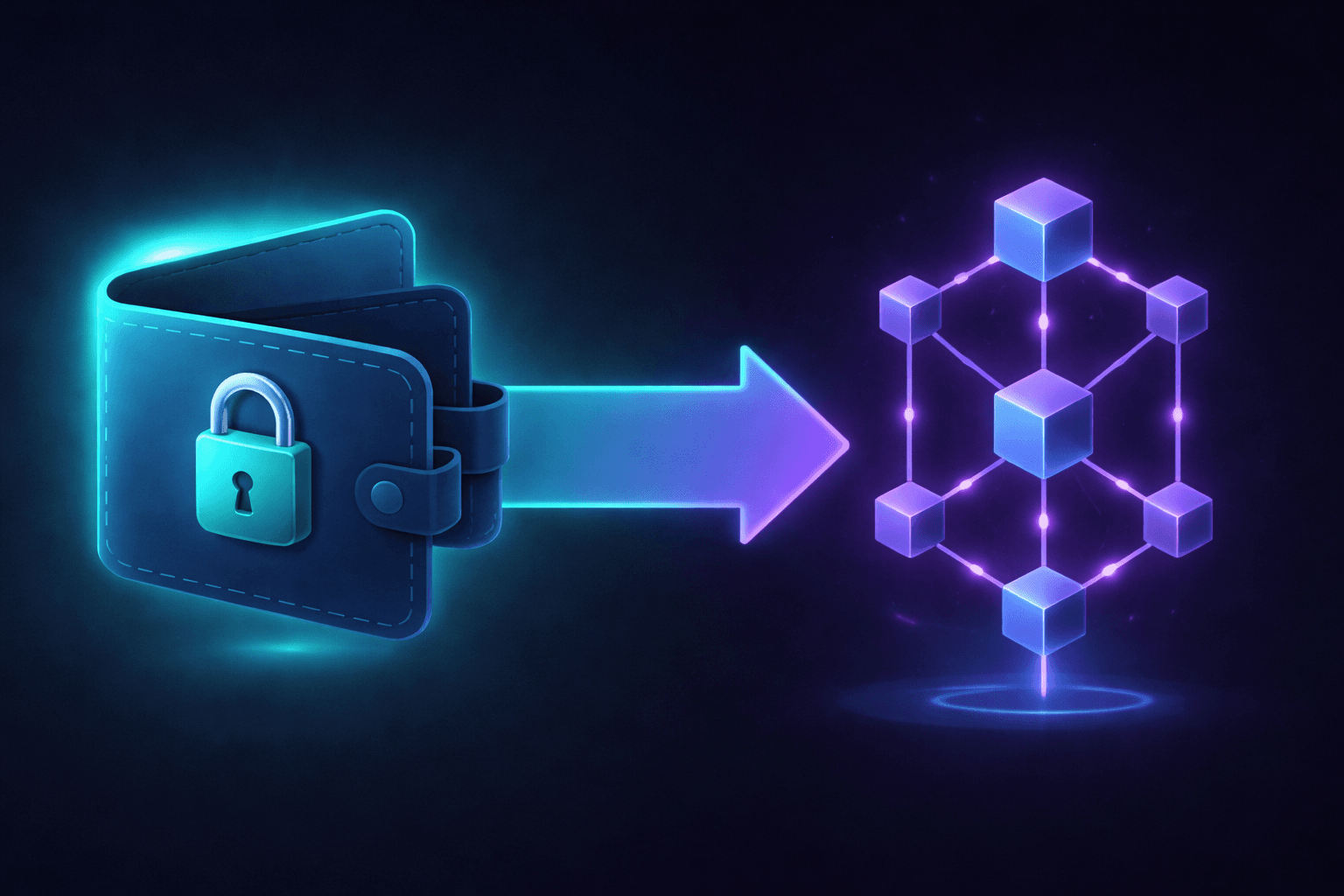
A decentralized exchange runs on a blockchain. When you swap tokens on a DEX, the transaction happens directly from your wallet using a smart contract: a piece of code that executes automatically without any company or person in the middle.
No account required. No KYC in most cases. No one holding your funds. You keep custody of your assets until the moment the swap executes, and even then, it's your wallet receiving the output.
This is what "on-chain trading" means. Every transaction is visible, verifiable, and settled directly by the blockchain.
The Trade-offs
DEXes aren't strictly better in every way.
Liquidity can be fragmented. Unlike a centralized exchange that aggregates all orders in one place, liquidity on DEXes is spread across many different pools. A token might be available on five different DEXes, each with different prices and depth.
Execution takes more attention. On a CEX, you hit buy and the exchange handles everything. On a DEX, you need to understand slippage, set your tolerance, and manage gas.
Gas fees are a factor. Every transaction on a blockchain costs a small fee. On Sui, these fees are low enough that they're rarely a concern, but they exist.
Where DEX Aggregators Come In
Because liquidity is fragmented across many protocols, finding the best price on a DEX is harder than it looks. A token might be cheapest on Protocol A for small amounts, but Protocol B gives better execution on larger trades.
DEX aggregators solve this by routing your swap across multiple pools automatically. Instead of checking five protocols manually, you get one interface that finds the most efficient path for your trade.
TradePort's aggregated DEX routes across approximately 53,000 pools across 12 protocols on Sui. The router is built on TradePort's own indexer, the fastest real-time indexing solution on Sui. That matters because stale data causes slippage. By keeping route assessment as close to live market conditions as possible, you get tighter execution than a single-protocol swap would give you.
For users already on TradePort for NFTs, this means access to the full Sui DEX ecosystem from the same interface, with NFT and token portfolios visible side by side.
Why This Matters
If you're trading on Sui, using a DEX aggregator rather than a single DEX almost always means better execution. And if you're already using TradePort for NFTs, you have one of the most complete on-chain trading interfaces on the network without setting up anything new.
The shift from centralized to decentralized trading isn't just ideological. You keep control of your assets, access the full range of on-chain liquidity, and don't need to trust a company to make good decisions with your funds.
That's the foundation. Everything else in DeFi builds from here.
Start Trading on TradePort
Now that you know the difference between a CEX and a DEX, put it to work. TradePort's aggregated DEX routes across ~53,000 pools across 12 Sui protocols. Same wallet you use for NFTs, no extra setup required.
Swap on TradePort today.